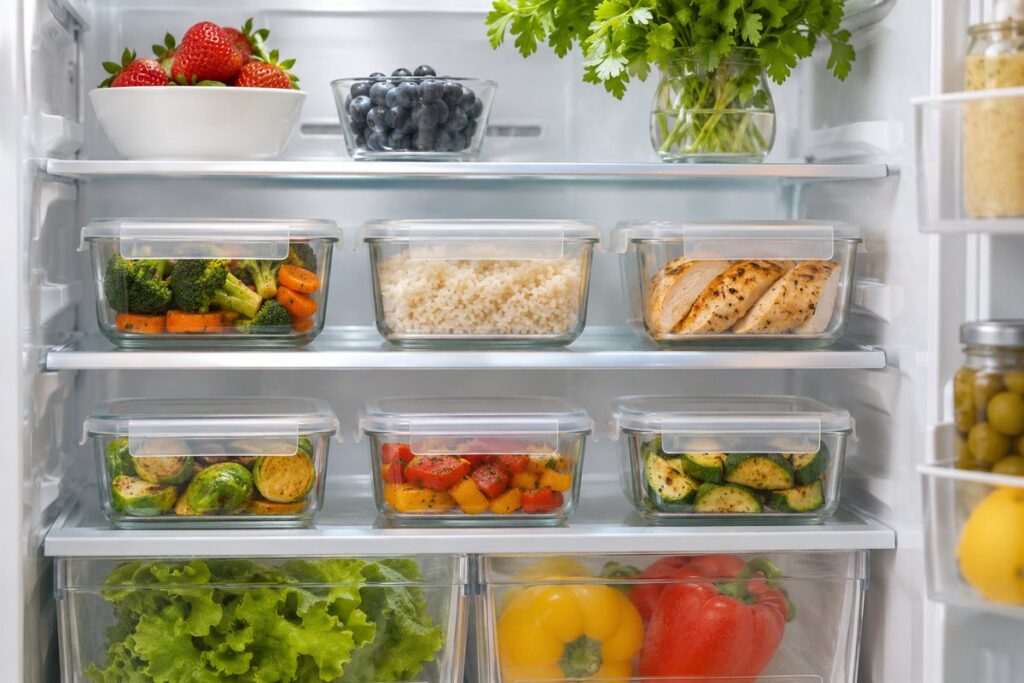
Cooking once and enjoying another meal later can make a busy week easier. But a container of leftovers needs more than an empty spot in the refrigerator. Timing, temperature, and a simple labeling habit help you decide what to eat next and what should be discarded. Whether you are packing lunch or saving a family dinner, safe storage belongs in your meal-prep routine.
A useful starting point is to decide what will happen to extra food before cooking. Set out clean containers, make room in the refrigerator, and think about which portions you will actually eat soon. This avoids the familiar problem of finishing dinner, getting distracted, and leaving everything on the counter.
Put food away promptly
The CDC recommends refrigerating perishable food within two hours, or within one hour when temperatures exceed 90°F. Do not wait for a pot of food to reach room temperature before taking action. Divide warm or hot leftovers into small portions in shallow containers and refrigerate them promptly.
Think about the entire meal, not only the cleanup. A dish may already have spent time on the table while people served themselves and talked. Putting it into a new container does not restart the clock. For a relaxed dinner or gathering, make packing leftovers an early job instead of the last chore of the evening.
Check the refrigerator, not just the dial
A numbered dial does not necessarily show the refrigerator’s actual temperature. The FDA recommends an appliance thermometer and a refrigerator temperature of 40°F or below. Keep the freezer at 0°F. Check the thermometer regularly rather than assuming the appliance is cold enough because the light turns on.
Leave room for cold air to circulate and keep stored food covered. Give ready-to-eat leftovers a visible place so they do not disappear behind newer groceries. Keep raw meat and its juices separate from cooked meals; sealed containers help prevent leaks. An organized shelf is useful, but safe temperatures and separation matter more than matching containers.
Label portions and plan when to use them
Write the dish name and preparation date on each container. FoodSafety.gov advises using cooked leftovers within four days. A clear date removes the guesswork when several people cook or share a refrigerator. Check the oldest containers before deciding what to prepare next.
For example, after making a large dinner, identify tomorrow’s lunch and decide whether the remaining portions have a place in the next few days. If they do not, freeze them promptly while they have been handled safely. Do not wait until you are uncertain about their storage history. Freezing is not a way to rescue food that has already been left out too long.
Make freezing and thawing part of the plan
Use portions that fit the way you eat: a single lunch, two servings of soup, or a side dish for dinner. Label the contents and freezing date, and keep a short list on your phone or refrigerator. This practical inventory helps you use what you saved instead of repeatedly buying ingredients for meals you already have.
For thawing, follow the CDC’s guidance to use the refrigerator, cold water, or a microwave rather than the counter. Refrigerator thawing is a convenient option to plan ahead for tomorrow’s meal. Food left on the counter can warm unevenly, allowing its outside to reach temperatures where bacteria multiply.
Reheat carefully and know when to discard
When reheating, use a food thermometer to check that leftovers reach 165°F. Follow recommended microwave cooking and standing times. A hot plate or visible steam does not confirm that every part of the food has reached the right temperature.
Finally, do not rely on the sniff test. The FDA warns that harmful bacteria can be present even when food looks and smells normal. If you cannot establish that leftovers were stored safely, do not taste them to investigate.
Build a five-minute leftovers routine
Before serving: choose containers that will hold the likely extras and check that there is room for them. After serving: pack the portions you are keeping rather than leaving them in the serving dish. Before closing the refrigerator: add the dish name and date. The next morning: look at the oldest portions when planning lunch. This sequence makes the decision visible instead of leaving everyone to remember what happened yesterday.
If several people share your kitchen, agree on one labeling method. A piece of tape and a marker may be enough. Write out the date rather than using an ambiguous note such as “Tuesday,” which becomes confusing the following week. Keep the marker near the containers so the system does not depend on finding supplies when you are tired.
Common questions about leftover storage
Should I cook a whole week of lunches at once? You can organize a longer meal plan without keeping every cooked meal in the refrigerator for the whole week. Match refrigerated portions to the four-day guidance, then freeze other portions promptly. Your schedule should follow the storage window, not the other way around. Separating the meals also helps you see how much you have actually prepared.
What if I forgot to label a container? First see whether you can reliably establish when it was prepared and how it was stored. Do not assign it today’s date simply because you noticed it today. A label is a record of food handling, not a new starting point for storage.
Do I need expensive meal-prep equipment? Start with suitable food-storage containers, a way to label them, an appliance thermometer, and a food thermometer. Focus on a system you can repeat. Decorative containers or a perfectly arranged refrigerator cannot compensate for food that has been kept too warm or stored too long.
The goal is not a complicated kitchen system. Pack promptly, keep food cold, label clearly, and plan to use it on time. A few repeatable steps make leftovers easier to manage and give tomorrow’s meal a much more dependable starting point.