One can of beans is easy to overlook until it is six o’clock, the fridge is mostly condiments, and everyone is hungry. The useful thing about canned beans is that they can be the main part of a meal, not just something stirred into a pot of chili. Give them a seasoning, something bright, and a place to land: toast, rice, a wrap, or the bottom of a soup bowl.
Buy beans for a meal you already know how to make
A white bean has a mild flavor and can take on the oil, lemon, or herbs you add to it. Black beans work well with salsa, lime, and roast vegetables. Chickpeas keep their shape when tossed with a sharp dressing or warmed with tomatoes. Those are suggestions rather than rules. A can of pinto beans can do most of the work black beans do in a simple rice bowl. Use your stock before buying three new kinds.
Check the label if added salt matters to you. A no-salt-added can gives you more control over the finished dish when the other ingredients, such as broth, olives, or salsa, already bring plenty of salt. Drain the beans for toast or a bowl, and rinse them if you prefer a cleaner flavor. For soup, decide whether you want a thicker broth before you discard all the liquid. If you use it, add it gradually so you can judge the flavor.
Turn white beans into a fast toast dinner
Warm drained white beans with a little olive oil and garlic. Add chopped tomato, a handful of spinach, or a spoonful of leftover roasted vegetables. Press some of the beans against the side of the pan with the back of a spoon so the mixture clings to the toast. A splash of water will loosen it if it becomes pasty. Finish with lemon and pepper, then spoon it over toast. If you like contrast, add a little chopped cucumber or a few crisp salad leaves at the table.
The same idea works on a baked potato or a leftover roll. If the cupboard is especially bare, the minimum version is beans, oil, and something sharp from the fridge. Even a spoonful of pickle brine can work if the beans are not already salty. Taste before adding more salt. The goal is a dinner that has a clear flavor, rather than a random pile of ingredients.
Use black beans to make a rice bowl with texture
Start with warm rice and beans, then add something crisp and something acidic. Cabbage, chopped peppers, or radishes all work with lime and salsa. If you have frozen corn, warm it with the beans. If you have yesterday’s roast vegetables, give them the job instead. Serve the crunchy ingredients separately if your household has different preferences or you plan to save part of the meal.
This template is particularly useful when the components need to stretch across multiple meals. Put more rice under one serving and use a tortilla for the other. Make the second serving taste different by switching the topping from salsa to lime and a spoonful of plain yogurt. If you are using cooked rice from the fridge, follow the storage and reheating guidance in our leftover safety guide.
Make a chickpea tomato bowl from the pantry
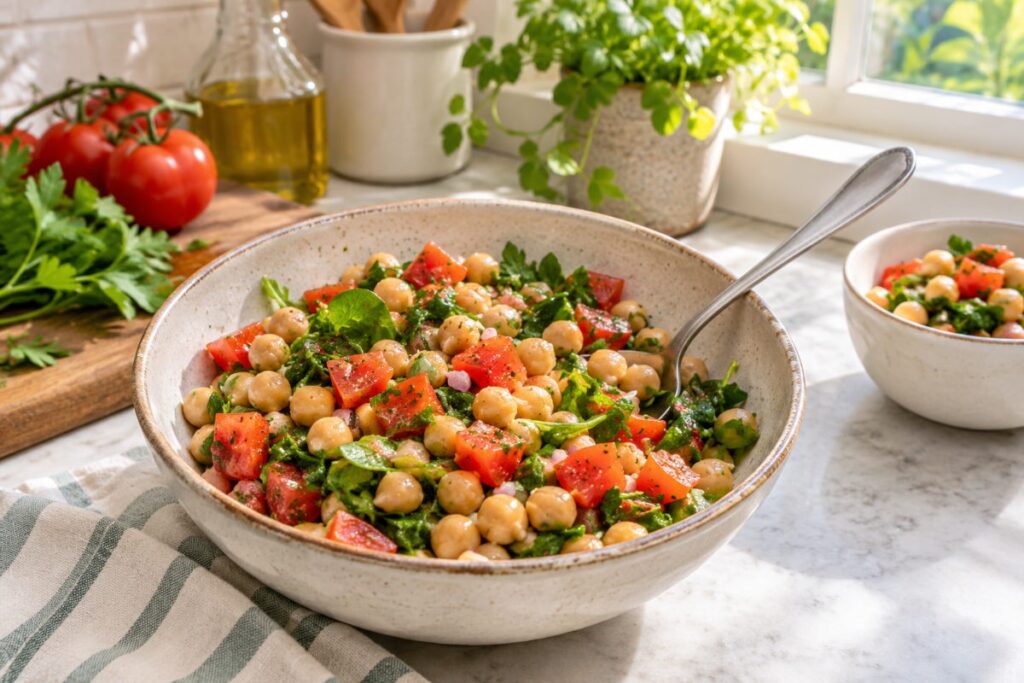
Set a pan over moderate heat and soften chopped onion if you have it. Stir in a spice you already like, such as cumin or smoked paprika, then add tomatoes and drained chickpeas. Simmer just long enough for the sauce to come together. Break up a few chickpeas with a spoon if you want more body. Stir in greens near the end or serve the mixture over couscous. Lemon, vinegar, and a little chopped parsley are three different ways to finish; you don’t need all of them.
When a tomato sauce tastes flat, check the balance before piling on more spices. It may need a pinch of salt, a splash of vinegar, or a little more time so the excess water cooks off. If it is too sharp, taste it with the grain or bread you intend to serve. The combination may be just right even if a spoonful straight from the pan tastes intense.
Keep the pantry small enough to rotate
Pick two beans, one grain or bread you use regularly, and two finishers that can do double duty. For example, white beans, chickpeas, bread in the freezer, a bottle of olive oil, and a lemon can become two different dinners. Put recently bought cans behind older ones so they get used in rotation rather than disappearing at the back.
The USDA’s canned-food guidance advises storing commercially canned food in a cool, dry place and not using leaking, bulging, or badly dented cans. Check the can before opening it and separate portions you intend to save rather than leaving them on the table through the evening. Write the meal idea on your grocery list as you use a can. Next week, that tells you what to replace and saves you from shopping for a pantry you only use in theory.
Start with one dinner
Choose the option closest to something you already eat. If your household likes sandwiches, try beans on toast before buying ingredients for a more elaborate bowl. If rice is already a staple, begin there. Once you have the first meal down, vary the texture or finishing ingredient before changing everything else. That turns the can of beans into a reliable plan for a busy night instead of another purchase you have to remember to use.
Make the nearly empty version once
Take stock before you cook. If there are no fresh herbs, use a spice you already own, and skip a garnish rather than buying it for one meal. A dinner that worked with just rice, beans, salsa, and a handful of chopped cabbage is worth writing down. That short list is what you’ll reach for the next time the fridge looks empty.